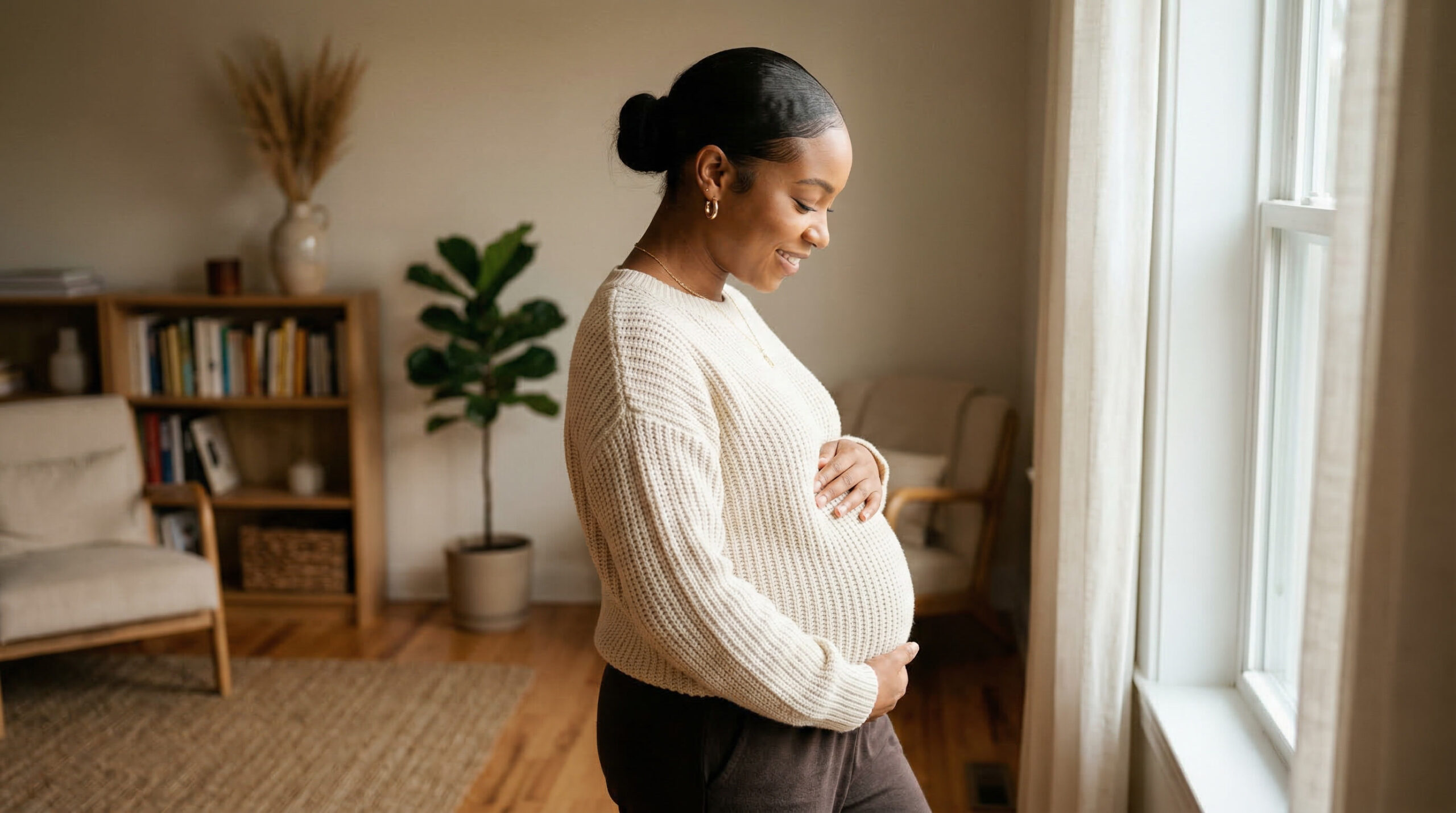
Medical information in this article is sourced from the American College of Obstetricians and Gynecologists (ACOG), the Mayo Clinic, the National Institutes of Health (NIH), and the Cleveland Clinic. This article is for informational purposes only and is not a substitute for professional medical advice. Always consult your healthcare provider with questions about your pregnancy.
What to Expect in Your Second Trimester (Weeks 13-27): The Honest Guide
You made it to the second trimester. Seriously, take a moment to acknowledge that because getting here is a big deal. For most moms, this is the stretch where things finally start to feel a little more manageable. The nausea begins to lift, your energy edges back, and you actually start looking pregnant instead of just feeling terrible for mysterious reasons.
I get it though. Even when the second trimester is going well, there is a lot happening in your body. And “a lot” can feel overwhelming when you are not sure what is normal and what deserves a phone call to your doctor. This guide covers all of it, honestly and without the glossy parts left out.
Here is the thing: the second trimester runs from week 13 through week 27, and it is often called the “honeymoon trimester” for good reason. But it is not all glowing skin and cute bump photos. Let us talk about what is really going on.
What Is the Second Trimester, Exactly?
The second trimester begins at week 13 and runs through the end of week 27. That is 15 weeks, and a lot happens in that window. If you are not sure exactly how far along you are, use our Due Date Calculator to get your estimated due date and week count.
Your Baby’s Development in the Second Trimester
This trimester is nothing short of remarkable. By week 13, your baby is about the size of a lemon and already has fingerprints. By week 27, they are close to two pounds and can open their eyes. Here is a closer look at what is happening:
Weeks 13-16
Your baby’s bones are hardening, facial features are forming, and they are starting to make small movements you cannot feel yet. The liver and spleen are working. Fingernails are developing. By week 16 your baby may be able to make sucking motions.
Weeks 17-20
This is when most moms feel those first flutters of movement, called quickening. According to the Mayo Clinic, first-time moms often feel movement between weeks 18 and 20, while moms who have been pregnant before may notice it as early as week 16. It often feels like bubbles, a light flutter, or a gentle tap from the inside.
Weeks 21-24
Your baby is developing a sleep-wake cycle, can hear sounds from outside the womb, and is growing rapidly. The skin is still translucent but fat is beginning to develop underneath. The lungs are maturing, though not yet ready for breathing air.
Weeks 25-27
Brain development is accelerating quickly. Your baby is gaining fat and filling out. According to the NIH, by week 27 the lungs are capable of breathing air with medical support, which is why week 24 is often considered the threshold of viability outside the womb.
Your Body in the Second Trimester
Your uterus is moving up and out of your pelvis now, which means your belly becomes visible usually between weeks 16 and 20 for first-time moms. According to the Mayo Clinic, for people with a healthy pre-pregnancy weight, the general guidance is to gain about one pound per week during this trimester. Your provider will monitor your weight gain and let you know if you are on track.
Second Trimester Symptoms: What Is Normal and What Is Not
I am not going to sugarcoat this. Even though the second trimester is easier for most people, it is not symptom-free. Here is what you might experience.
Round Ligament Pain
That sharp, stabbing pain on one or both sides of your lower belly? That is almost certainly round ligament pain. The ligaments supporting your uterus are stretching fast to keep up with your growing baby. It can happen when you move suddenly, sneeze, cough, or roll over in bed. It is usually completely normal. That said, if the pain is severe, does not ease after resting, or comes with fever, bleeding, or burning when you urinate, call your provider right away.
Heartburn and Indigestion
Here is one nobody warns you about enough. According to the Cleveland Clinic, more than half of all pregnant women experience heartburn, especially in the second and third trimesters. Smaller, more frequent meals help. Staying upright after eating helps. Talk to your doctor before taking any antacids.
Nasal Congestion
Pregnancy hormones increase blood flow to your mucous membranes, which means a stuffy or runny nose is genuinely common. The Cleveland Clinic notes this is called pregnancy rhinitis, and it can last through your entire pregnancy. A humidifier and saline rinse can help take the edge off.
Back Pain
As your bump grows, your center of gravity shifts forward. According to ACOG, back pain affects more than half of pregnant women at some point. Supportive shoes, a pregnancy pillow, prenatal yoga, and a maternity support belt can all make a real difference.
Braxton Hicks Contractions
Some people start feeling Braxton Hicks, also called practice contractions, as early as the second trimester. They feel like a tightening across your belly that comes and goes. Unlike real labor contractions, they are irregular and usually stop when you change positions or drink water.
The Mayo Clinic notes that Braxton Hicks are a normal part of pregnancy, but if contractions become regular, painful, or are accompanied by other symptoms, contact your provider. You can also read our guide to Signs Labor Is Coming to understand the difference.
Swollen Gums and Bleeding When You Brush
Pregnancy hormones make your gums more sensitive and prone to inflammation – this is called pregnancy gingivitis. According to ACOG, dental care including cleanings and most procedures is safe during pregnancy. Keep brushing and do not skip your cleanings.
Increased Energy
Here is the good news. For most people the crushing fatigue of the first trimester lifts significantly in the second trimester. You may feel more like yourself, more motivated, and more able to get things done. This is your window to prepare, nest, and enjoy the pregnancy a little.
Symptoms That Need Immediate Attention
Call your provider right away or go to the emergency room if you experience any of the following:
- Bleeding or spotting
- Severe or persistent abdominal pain
- Sudden or severe swelling in your face, hands, or feet
- Vision changes or severe headache (these can be signs of preeclampsia)
- Fever above 100.4 degrees F
- Decreased or absent baby movement after week 20
- Signs of urinary tract infection including burning, urgency, or pressure
- Fluid leaking from your vagina before week 37
When in doubt, call. That is what your provider is there for and there is no such thing as an overreaction when it comes to pregnancy symptoms.
Prenatal Tests and Appointments in the Second Trimester
The Anatomy Scan (Weeks 18-20)
This is the big one. The anatomy scan is a detailed look at your baby’s developing organs, limbs, brain, heart, and overall growth. According to ACOG, your provider will also check the location of your placenta and the amount of amniotic fluid. Most parents find out the sex of the baby at this appointment if they choose to know.
Quad Screen (Weeks 15-20)
The quad screen is a blood test that measures four substances to assess the risk of certain chromosomal conditions. According to the NIH, it is a screening test, not a diagnostic test, meaning it identifies risk levels rather than confirming a diagnosis. A high-risk result would typically lead to further testing such as amniocentesis.
Glucose Screening Test (Weeks 24-28)
Most providers order a glucose challenge test between weeks 24 and 28 to screen for gestational diabetes. According to the Mayo Clinic, if your result is above a certain threshold you will be asked to take a longer glucose tolerance test to confirm or rule out gestational diabetes.
Routine Prenatal Visits
In the second trimester you will typically see your provider every four weeks. For a full walkthrough of what to expect at these visits, see our guide: Your First Prenatal Appointment: What to Expect and What to Ask.
Feeling Your Baby Move: What to Expect
Feeling your baby move for the first time is one of the most remarkable moments of pregnancy. I get it if you are anxiously waiting for it and checking in with yourself constantly.
Here is the thing: there is a wide range of normal. First-time moms often do not feel movement until weeks 18 to 20. If you have been pregnant before you might notice it earlier. At first, it is subtle – easy to dismiss as gas or hunger pangs.
Over time, it becomes more distinct. The Cleveland Clinic recommends doing kick counts at the same time each day when your baby tends to be active starting around week 28. If you notice a significant decrease in movement, contact your provider.
What You Can Do to Support a Healthy Second Trimester
Keep Up With Prenatal Vitamins
Your prenatal vitamin with folic acid, iron, and DHA remains important throughout the second trimester. According to the NIH, iron needs increase during pregnancy as your blood volume grows. If your provider has recommended additional supplementation, take it as directed.
Stay Active
According to ACOG, pregnant people without complications should aim for 150 minutes of moderate-intensity aerobic activity per week. Walking, swimming, prenatal yoga, and low-impact aerobics are all excellent choices. For tips on rest and recovery, see our guide on Sleep During Pregnancy.
Watch for Signs of Preeclampsia
Preeclampsia is a pregnancy complication involving high blood pressure that typically develops after week 20. According to ACOG, warning signs include sudden swelling especially in the face and hands, severe headache, vision changes, and upper abdominal pain. If you notice any of these symptoms, do not wait. Call your provider immediately.
Eat Well and Stay Hydrated
The Mayo Clinic notes that most pregnant women need about 300 to 350 extra calories per day during the second trimester. Focus on whole foods, lean proteins, plenty of vegetables, and aim for at least eight to ten cups of water daily.
Start Thinking About Birth Preparation
The second trimester is a great time to start a childbirth education class, tour your birth facility, and begin thinking about your birth preferences. You do not need all the answers yet but starting to gather information now means you will feel more prepared as the third trimester approaches.
Frequently Asked Questions About the Second Trimester
When does the second trimester start and end?
The second trimester starts at week 13 and ends at the end of week 27. Week 28 marks the beginning of the third trimester.
Is it normal to show more with a second pregnancy?
Yes, completely normal. Your abdominal muscles have already been stretched once, so your uterus tends to show earlier in subsequent pregnancies. Some women notice a visible bump as early as weeks 12 to 14 with a second baby.
Can I travel during the second trimester?
For most healthy pregnancies, the second trimester is the best time to travel. According to ACOG, most airlines allow pregnant passengers to fly up to 36 weeks. Always check with your provider before any significant travel.
Is it safe to sleep on my back during the second trimester?
The general guidance from ACOG is to avoid sleeping flat on your back after week 20 as the weight of the uterus can compress a major blood vessel. Sleeping on your left side is considered optimal for blood flow to the baby and kidneys.
Why is my belly button popping out?
As your uterus expands and pushes outward, your belly button may pop from an innie to an outie. This is harmless and completely normal. It usually goes back after delivery.
Can I have sex during the second trimester?
For most healthy pregnancies, yes. Sex is safe during pregnancy and does not harm the baby. Your provider may advise against it if you have specific complications such as placenta previa or a history of preterm labor.
Is round ligament pain dangerous?
Round ligament pain is uncomfortable but not dangerous. It is caused by the rapid stretching of the ligaments supporting your uterus. It typically feels like a sharp cramp or shooting pain on one or both sides of your lower belly. Rest, changing positions slowly, and gentle stretching can help. Contact your provider if the pain is severe, persistent, or accompanied by other symptoms.
A Note on the Emotional Side of the Second Trimester
Here is the thing that does not always make it into pregnancy guides. The second trimester can bring up complicated emotions alongside the physical changes.
You might feel genuine excitement and joy as your bump grows and the pregnancy feels more real. You might also feel anxiety about the anatomy scan, worry, grief if you have had a previous loss, or pressure to feel a certain way that you just do not feel.
All of that is normal.
According to ACOG, perinatal mood and anxiety disorders affect up to one in five pregnant women and are underreported because so many people believe they should just feel happy. If you are struggling emotionally, please tell your provider. You deserve support, and help is available.
You Are in the Good Part
The second trimester is the stretch where most moms find their footing. Your body is incredible. Your baby is growing in ways that would take your breath away if you could see it happening in real time. And you are doing something remarkable every single day just by showing up.
Your body knows what it is doing. Trust it, take care of it, and lean on your provider whenever you have questions. That is what they are there for.
You have got this, mama. 💙
This article is for informational purposes only and does not constitute medical advice, diagnosis, or treatment. The information provided is drawn from reputable medical sources including ACOG, the Mayo Clinic, the NIH, and the Cleveland Clinic, but individual pregnancies vary widely. Never disregard professional medical advice or delay seeking it because of something you have read on this website. If you are experiencing a medical emergency, call 911 or your local emergency number immediately.
Leave a Reply