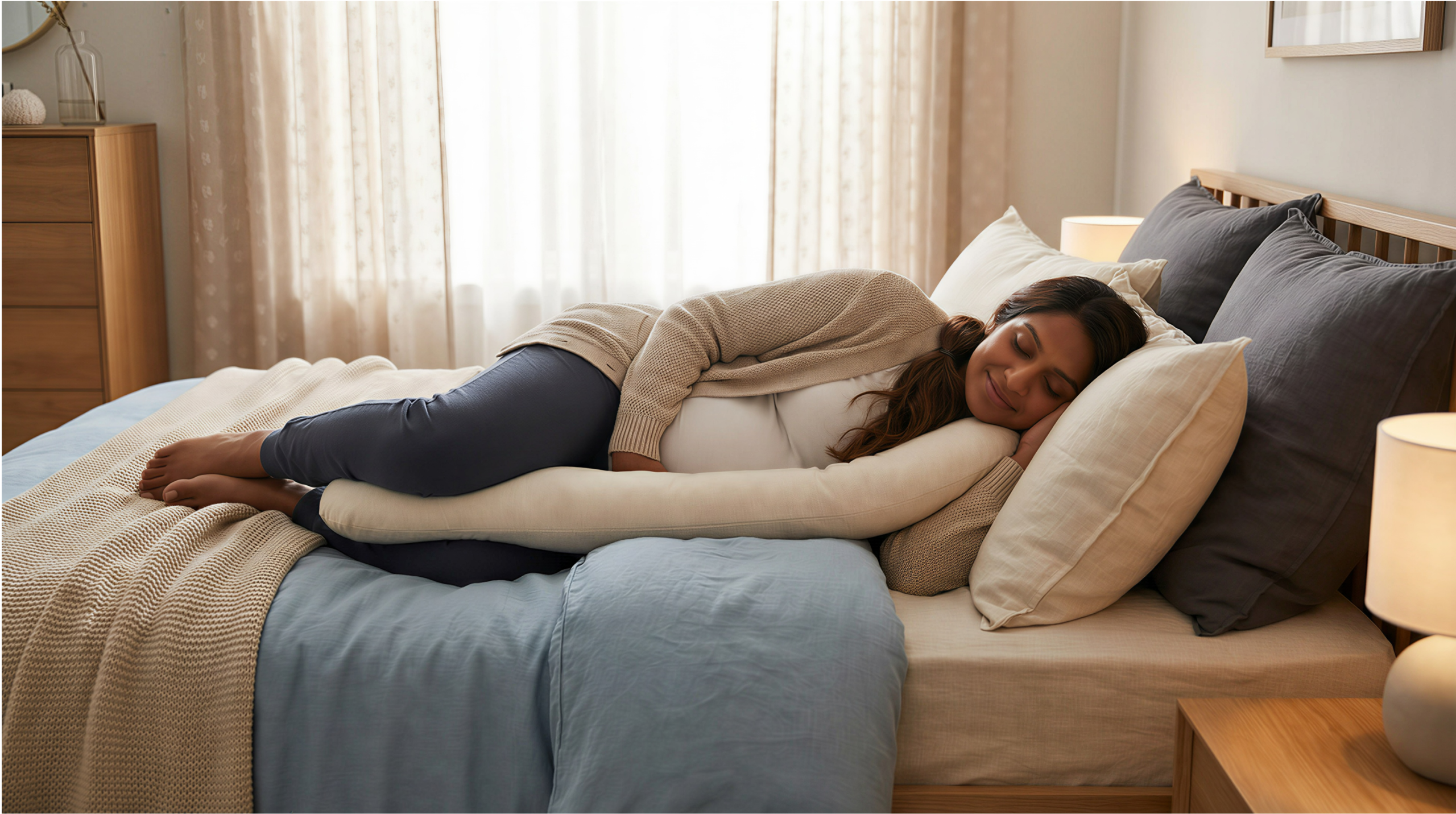
Sleep problems during pregnancy are incredibly common, and if you’re struggling to get rest, I want you to know right away: you’re not alone, and this is completely normal.
Hormonal changes, physical discomfort, and your growing belly all affect how well you sleep, and it can feel frustrating. But here’s the good news: most pregnancy sleep issues are temporary, and understanding what’s happening in each trimester can help you get the rest you need.
Not sure how far along you are? Use our free Due Date Calculator to check your timeline.
Why Does Pregnancy Affect Sleep?
Here’s the thing: it’s not just about trying to get comfortable with a growing belly. Your body is going through massive hormonal shifts that directly affect your sleep-wake cycle.
During early pregnancy, your progesterone levels surge, which can make you feel absolutely exhausted during the day, but then paradoxically wide awake at night. It doesn’t seem fair, does it? [1]
As your pregnancy progresses, you’ll add physical discomforts to the mix: back pain, bathroom trips every hour, heartburn that won’t quit, and a little one who seems to think 2 AM is the perfect time for gymnastics.
But here’s what I want you to remember: these sleep disruptions are temporary. They’re a normal part of growing a human being. And there ARE things you can do to make it better.
First Trimester: The Exhaustion is Real
The first trimester often catches women completely off guard. You might not even be showing yet, but you feel like you could sleep for a week straight.
What You Might Experience
Bone-deep tiredness during the day: That overwhelming fatigue? It’s your body working incredibly hard to support early pregnancy development. Progesterone is doing its job, it just happens to make you feel like you’re moving through molasses.
Trouble sleeping at night: Despite being exhausted, you might find yourself lying awake, mind racing. Anxiety about the pregnancy, hormones, and those frequent bathroom trips can all gang up on your sleep [2].
Constant bathroom breaks: Even before your belly shows, your uterus is already expanding and pressing on your bladder. Add in increased blood flow making your kidneys work overtime, and you’ve got a recipe for nighttime interruptions.
What Actually Helps
Listen to your body and nap. I know, I know, you’ve got things to do. But if you’re exhausted, a short 20 to 30 minute nap can make a real difference. Just try not to nap too late in the afternoon, or you’ll be staring at the ceiling at midnight.
Create a bedtime routine. Your body needs signals that it’s time to wind down. A warm bath, some gentle stretching, a cup of herbal tea, a few pages of a book, whatever helps you relax. Make it consistent.
Front-load your fluids. Drink plenty of water during the day, but start tapering off 2 to 3 hours before bed. You’ll still probably get up once or twice, but maybe not five times.
If you’re just finding out you’re pregnant and want to know your estimated due date, our pregnancy due date calculator can help you plan ahead.
Second Trimester: The Sweet Spot
If the first trimester knocked you flat, the second trimester often feels like coming up for air. Many women call this the “golden period” of pregnancy, and for good reason.
What to Expect
Your energy comes back. As your hormones level out, that crushing fatigue usually lifts. You might actually feel like yourself again, maybe even better than yourself [2].
Better sleep quality. Fewer bathroom trips, fewer hormonal disruptions, and more restful nights. Enjoy this while it lasts!
Your belly is growing but still manageable. You’re starting to show, but you’re not yet at the “can’t get comfortable no matter what” stage. This is a good time to start practicing new sleep positions.
How to Make the Most of It
Start side sleeping now. The recommended sleep position during pregnancy is on your side, especially your left side. This optimizes blood flow to your baby and takes pressure off major blood vessels. It’s easier to get used to this now, before your belly makes it mandatory [1].
Get a pregnancy pillow. Even if you don’t desperately need one yet, getting comfortable with a body pillow now will make the third trimester transition much easier. Think of it as training.
Build good habits while you can. Consistent bedtime, limited caffeine (no more than 200mg per day, and only in the morning), regular exercise. Establish these patterns now while you have the energy.
Third Trimester: The Final Stretch
I’m not going to sugarcoat this: the third trimester can be tough when it comes to sleep. Your due date is approaching, your belly is substantial, and getting comfortable feels like an engineering challenge.
What You’re Dealing With
Waking up multiple times a night. This is incredibly common in the final weeks. Some people say your body is preparing you for those newborn nighttime wakings. Whether that’s comforting or annoying is up to you [2].
A parade of physical discomforts. Back pain, leg cramps, heartburn, constant bathroom trips. Sometimes it feels like everything at once. Finding a comfortable position can seem impossible.
Your baby’s activity schedule. Babies tend to be most active when you’re trying to rest. Those kicks and rolls are wonderful, but not always at 3 AM when you’re desperate for sleep.
Shortness of breath. As your uterus expands, it pushes up on your diaphragm. Lying flat can make breathing feel harder than it should.
Vivid dreams. Many women experience intense, sometimes strange dreams during late pregnancy. Hormones and anticipation about the birth can make your dream life very interesting.
Strategies That Actually Work
Become a pillow architect. Seriously, use as many as you need. One between your knees to align your hips, one under your belly for support, and prop your upper body slightly to help with heartburn and breathing. There’s no prize for using fewer pillows [1].
Avoid sleeping on your back. In the third trimester, lying on your back can compress major blood vessels and reduce blood flow to your baby. If you wake up on your back, don’t panic. Just roll to your side. Your body usually wakes you up before it becomes a problem.
Tackle heartburn head-on. Smaller, more frequent meals. Avoid spicy and acidic foods, especially in the evening. Elevate your upper body with pillows. That burning sensation is no joke, but these strategies can help.
Deal with leg cramps. Stretch your calves before bed, stay hydrated, and make sure you’re getting enough calcium and magnesium. If cramps wake you up, flex your foot (toes toward your shin) to help relieve it faster.
Optimize your bedroom. Cool, dark, and quiet. A fan can help with both white noise and temperature control. Some women find a sound machine helpful for blocking out disturbances.
Wind down intentionally. Gentle prenatal yoga, meditation, deep breathing. Whatever helps calm your mind. Your body is working hard; help your brain settle down too.
Safe Sleep Positions During Pregnancy
Let’s talk about sleep positions, because this is something a lot of pregnant women worry about.
Left side is ideal. Sleeping on your left side maximizes blood flow to your placenta and helps your kidneys do their job efficiently. It can also reduce swelling in your ankles and feet [1].
Right side is fine too. If left side gets uncomfortable, switch to your right. It’s still safe, just slightly less optimal for circulation.
Avoid back sleeping in the third trimester. Your growing uterus can press on the vena cava (the major vein returning blood to your heart), which can make you feel dizzy and reduce blood flow to your baby. But if you wake up on your back, don’t stress. Just shift to your side.
Stomach sleeping? It’s not harmful, but it becomes naturally impossible as your belly grows. Most women give it up by the second trimester simply because it’s uncomfortable.
Tips That Work for Any Trimester
No matter where you are in your pregnancy, these basics can help:
Keep a consistent schedule. Same bedtime, same wake time, even on weekends. Your body’s internal clock will thank you.
Be smart about caffeine. Limit it to 200mg or less per day (about one regular cup of coffee), and keep it to the morning hours only.
Stay active. Regular exercise improves sleep quality, reduces stress, and helps with all those pregnancy aches. Just don’t work out right before bed.
Create a screen-free wind-down. The blue light from phones and tablets messes with your melatonin production. Try to put screens away at least an hour before bed.
Eat wisely in the evening. Heavy, spicy, or acidic foods close to bedtime are a recipe for restless nights. If you need a snack, keep it light: crackers, yogurt, a banana.
When to Talk to Your Healthcare Provider
While sleep disruptions are normal during pregnancy, some symptoms deserve a conversation with your doctor or midwife:
• Severe insomnia that’s affecting how you function during the day
• Loud snoring that started during pregnancy (this could indicate sleep apnea)
• Extreme fatigue that doesn’t get better with rest
• Restless leg syndrome that makes falling asleep nearly impossible
• Symptoms of depression or anxiety that are interfering with your sleep
Don’t brush these off. Your healthcare provider can help figure out what’s going on and suggest safe solutions.
Frequently Asked Questions About Pregnancy Sleep
Is it normal to wake up a lot during pregnancy?
Yes, waking up multiple times per night is very common during pregnancy, especially in the first and third trimesters. Frequent urination, discomfort, and hormonal changes all contribute to disrupted sleep.
Which trimester has the worst sleep?
Most women find the third trimester the most challenging for sleep due to physical discomfort, frequent bathroom trips, and difficulty finding a comfortable position. The first trimester can also be difficult due to hormonal changes and nausea.
Can sleeping on my back harm my baby?
In the third trimester, sleeping on your back for extended periods can compress a major blood vessel and reduce blood flow to your baby. However, if you wake up on your back, simply roll to your side. Your body typically wakes you before it becomes a problem.
Why are pregnancy dreams so vivid?
Vivid dreams during pregnancy are thought to be caused by hormonal changes, increased sleep disruptions (which make you more likely to remember dreams), and anxiety or excitement about the upcoming birth.
What is the best sleeping position during pregnancy?
Sleeping on your left side is considered the best position during pregnancy. It optimizes blood flow to the placenta, helps your kidneys function efficiently, and reduces swelling. Right side sleeping is also safe.
You’ve Got This
Sleep challenges during pregnancy are incredibly common, and while they can be frustrating, they’re temporary. Each trimester brings its own quirks, but with the right strategies and a little patience, you can get better rest.
Remember: your body is doing something amazing right now. It’s growing and nourishing a whole new person. Be gentle with yourself, rest when you can, and don’t be afraid to ask for help when you need it.
And if you’re still figuring out your timeline, use our free due date calculator to estimate when your little one will arrive. Knowing your due date can help you plan and prepare for each stage of your pregnancy journey.
Sweet dreams, mama. You’re doing great. 💙
References
[1] American Pregnancy Association. Best Sleeping Positions While Pregnant. https://americanpregnancy.org/healthy-pregnancy/pregnancy-health-wellness/sleeping-positions-while-pregnant/
[2] Parkview Health. Troubleshooting sleep problems during pregnancy by trimester. https://www.parkview.com/blog/troubleshooting-sleep-problems-during-pregnancy-by-trimester
Leave a Reply